Zones
The three-zone concept is based on the following definition:
Explosive gas atmosphere is a mixture of air, under atmospheric conditions, of a flammable material in the form of a gas or vapour in which ignition, permits self-sustaining propagation.
There is also a “non-hazardous area” where flammable gas is not a consideration and where control rooms, office and canteen facilities are often located.
ZONE 0
A place in which an explosive atmosphere consisting of a mixture with air or flammable substances in the form of gas vapour or mist is present continuously or for long periods or frequently.

The area is defined by circles of any size.
Other types of symbols may be used. Always refer to the area classification drawing.
Zone 0 is found typically in the space above the liquid in a mixing vat or within a storage vessel.
ZONE 1
A place in which an explosive atmosphere consisting of a mixture with air or flammable substances in the form f gas vapour or mist is likely to occur in normal operation occasionally. The area is identified by cross hatching, preferably at 45 degrees to the horizontal.
Other types of symbols may be used. Always refer to the area classification drawing.
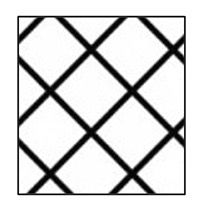
Examples of Zone 1 locations:
- Around the seal of an industrial pump, situated indoors, pumping gasoline
- In any below grade-level catchment sump
- Areas immediately around a storage tank vent pipe opening which vent during filling
- Area around a mixing vessel which has a lid which is opened regularly.
- Area around regularly used sample points
- Vents which release regularly
ZONE 2
A place in which an explosive atmosphere consisting of a mixture with air of flammable substances in the form of gas, vapour or mist is not likely to occur in normal operation but, if it does occur, will persist for a short period only.

The area is identified by slanted lines, uniformly spaced, preferably at 45 degrees to the horizontal.
Other types of symbols may be used. Always refer to the area classification drawing.
Examples of Zone 2 locations:
- Around the seal of an industrial pump, situated outdoors, pumping gasoline
- The whole interior of a hydrogen compressor house, which is open at ground level and vented at upper level. The design contributes to rapid dispersal of any gas which might leak past bearing seals, particularly during start up.
Zone 1 areas quite often have a surrounding Zone 2 area to cater for larger, less frequent leaks.
This can be seen in the diagram below of a storage tank that is within a bund wall.
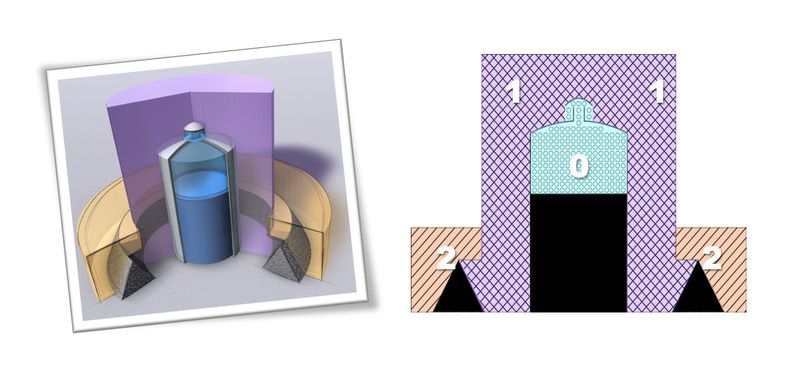
Storage tank within a bund wall.